

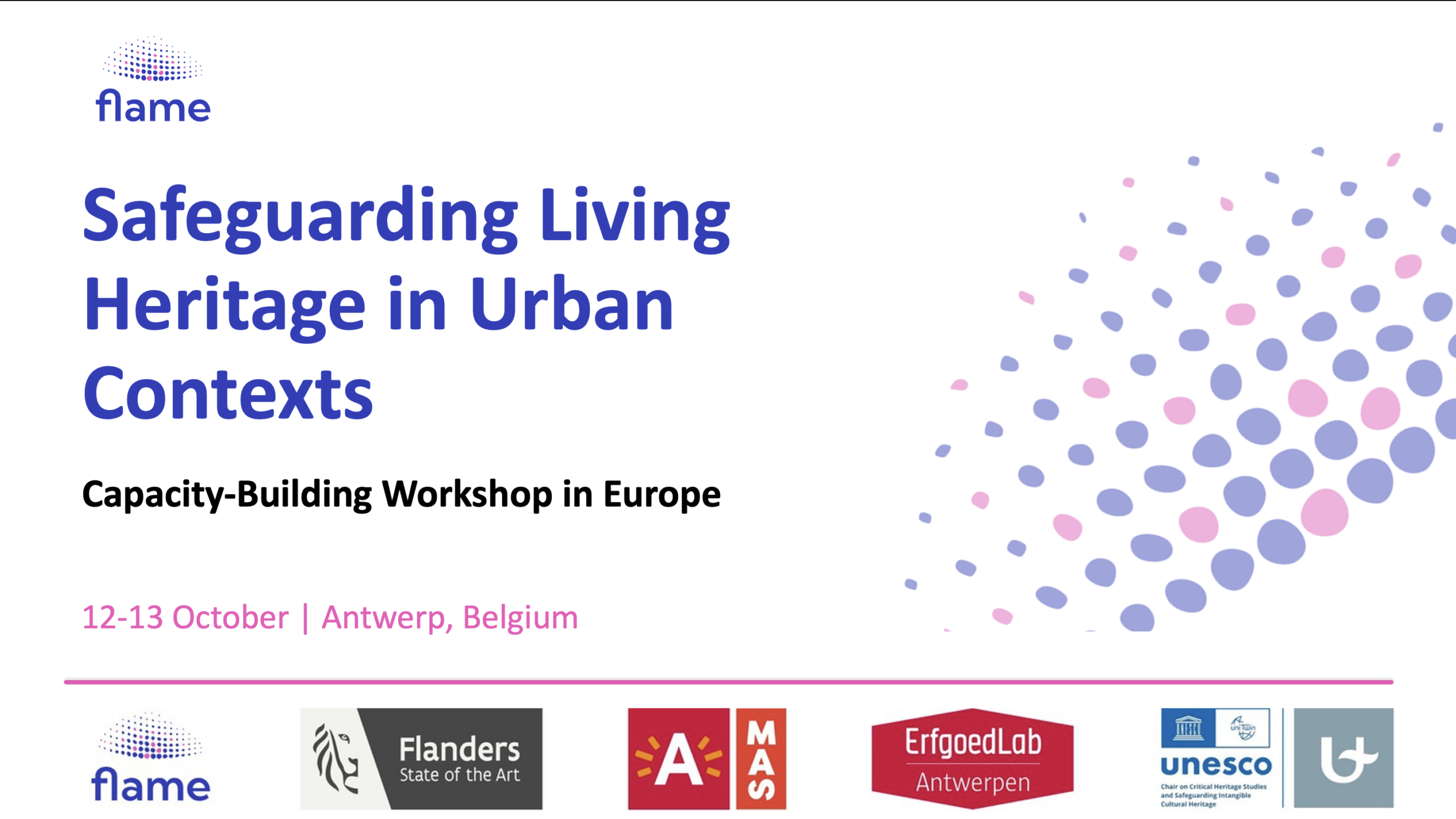
Presentations, practical methodologies and field visits exploring how living heritage is practised, transmitted and safeguarded in urban environments.
About the resource
Held in Antwerp on 12–13 October 2026, the Safeguarding Living Heritage in Urban Contexts capacity-building workshop brought together heritage professionals and practitioners to explore the relationships between living heritage, urban environments and community life.
The workshop drew on UNESCO’s Guidance Note on Safeguarding Intangible Cultural Heritage in Urban Contexts and related training materials developed through an international process led by María Claudia López Sorzano. It aimed to strengthen participants’ understanding of how urbanisation, migration, changing neighbourhoods and evolving social relationships shape the practice and transmission of intangible cultural heritage.
From Concept to Practice
Combining presentations, practical methodologies and field visits, the workshop encouraged participants to examine living heritage within its wider urban context and to reflect on approaches to its safeguarding.
Field visits offered opportunities to explore the diversity of living heritage in Antwerp, including cultural practices in Chinatown, martial arts and their relationship with community life, and the tradition of the Reuzen and Reuskens in Borgerhout. These encounters highlighted the role of local communities, practitioners, everyday activities and shared celebrations in shaping the cultural identity of urban neighbourhoods.
Participants also used practical tools developed by María Claudia López Sorzano to analyse living heritage in its urban setting, considering the relationships between heritage practices, communities and the spaces in which they take place.
Learning resources
This resource brings together materials from the workshop to support further learning and reflection on safeguarding living heritage in urban contexts. The presentations, methodologies and other materials are intended to help heritage professionals, researchers, practitioners and community organisations apply these approaches in their own contexts.
By connecting international guidance with local experiences, the workshop highlighted the importance of community participation and context-sensitive approaches to safeguarding living heritage in cities.
Who is this resource for?
This resource is intended for:
- Heritage professionals and cultural institutions
- Mediators and facilitators
- Government officials and policymakers
- Museums, archives and NGOs
- Educators, trainers and researchers
- Anyone interested in supporting community-led safeguarding of living heritage
Explore the materials
The workshop materials explore how living heritage is practised, transmitted and safeguarded in urban environments. They combine presentations, practical tools and insights from field visits to local communities and heritage initiatives in Antwerp.
Through examples from Chinatown and Borgerhout, participants explored the relationships between living heritage, community identity and urban life, including martial arts, local traditions and the Reuzen and Reuskens.
The materials provide inspiration and practical approaches for understanding living heritage in cities and supporting the communities that practise and transmit it.
Course dates: 12–13 October 2026 Antwerp, Belgium
Organised by: FLAME – European Centre for the Safeguarding of Living Heritage in collaboration with the UNESCO Chaire on Critical Heritage Studies and the Safeguarding of Intangible Cultural Heritage, MAS Museum, Heritage Cell Antwerp
Materials: Presentations, practical tools elaborated by María Claudia Lopez, and documentation from field visits