

Safeguarding Living Heritage in Urban Contexts:
Capacity-Building Workshop in Europe
12–13 October 2026 | Antwerp, Belgium
FLAME – European Centre for the Safeguarding of Living Heritage, in collaboration with the UNESCO Chair on Critical Heritage Studies and Safeguarding of the Intangible Cultural Heritage, is pleased to announce a two-day European capacity-building workshop on the safeguarding of living heritage in urban contexts.
The workshop will take place on 12 and 13 October 2026 in Antwerp (Belgium) and will bring together intangible cultural heritage experts and practitioners, urban planners, built heritage professionals, researchers, policy makers and other cultural professionals from across Europe.
The workshop builds upon UNESCO’s recent Guidance Note on Safeguarding Intangible Cultural Heritage in Urban Contexts and related international capacity-building initiatives developed under the framework of the 2003 Convention for the Safeguarding of the Intangible Cultural Heritage.
The training will be facilitated by María Claudia López the lead facilitator for the international process leading to the development of the Guidance Note and related training materials.
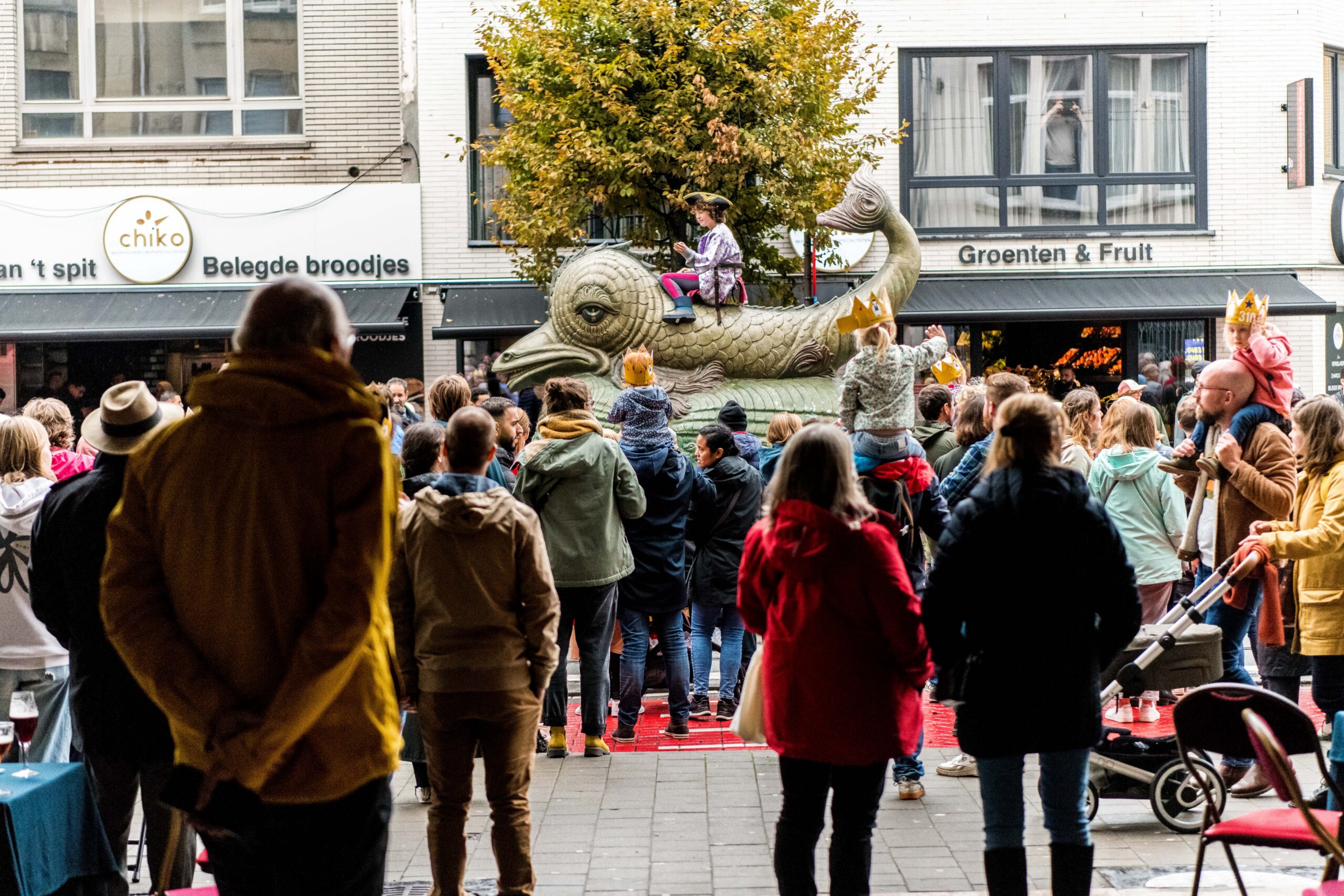
by Dries Luyten
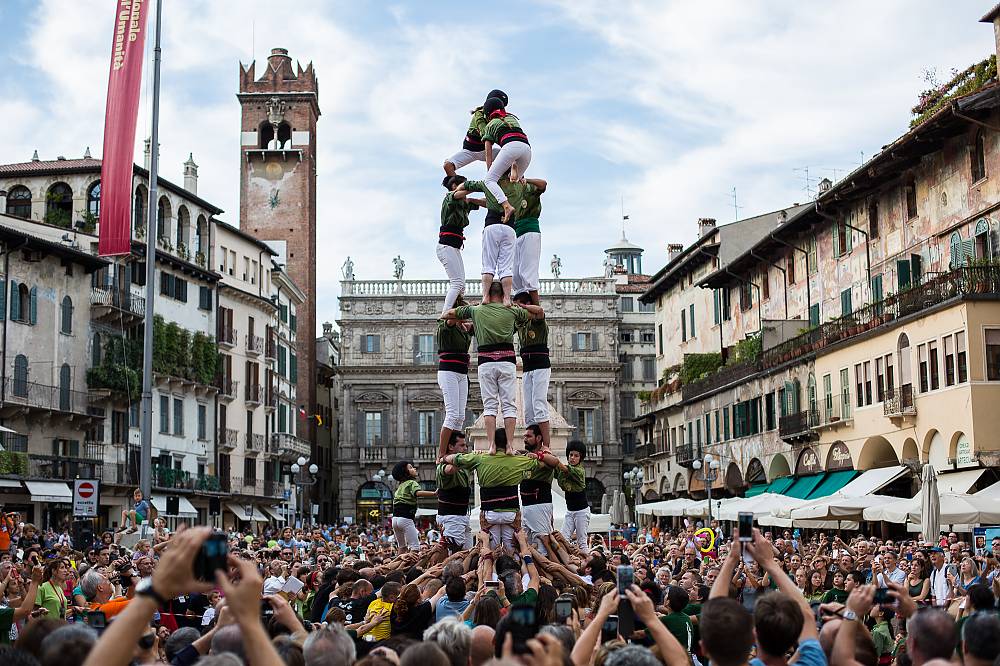
Selected in 2022 on the Register of Good Safeguarding Practices
Photograph: Vanni Sartori
© AGA, 2015
Background and objectives
Urban contexts present both opportunities and challenges for the safeguarding of living heritage. Rapid urban transformation, changing spatial dynamics, tourism, migration, housing pressures and other socio-economic developments can deeply affect the transmission and practice of intangible cultural heritage. At the same time, living heritage contributes significantly to social cohesion, cultural diversity, identity, well-being and sustainable urban development.
This workshop aims to strengthen dialogue and collaboration between the fields of:
- intangible cultural heritage safeguarding;
- urban planning and development;
- built heritage and public space;
- cultural policy and participation;
- sustainable and inclusive city-making.
The workshop will introduce participants to key concepts, policy frameworks, methodological approaches and practical tools related to safeguarding living heritage in urban contexts.
Particular attention will be given to:
- the relationship between living heritage and urban planning;
- challenges and opportunities for safeguarding living heritage in cities;
- practical methodologies and tools to safeguarding living heritage in urban contexts ;
- interdisciplinary exchange and peer learning;
- case studies from different urban contexts.
Format and participants
Participation is limited to 30 participants in order to ensure an interactive and practice-oriented format.
The aim of the workshop is to bring together a balanced interdisciplinary group including:
experts and practitioners in ICH;
professionals working in urban planning and built heritage;
representatives of heritage organisations, networks and public institutions.
Participation in the workshop is free of charge. The workshop programme is generously offered by FLAME and the ICH UNESCO Chair at University of Antwerp.
Participants are only expected to cover their own travel and accommodation costs.
Preliminary programme overview
Monday, 12 October 2026
Concepts, frameworks and practical approaches
The first day will focus on the conceptual and methodological dimensions of safeguarding intangible cultural heritage in urban contexts.
Topics will include:
- introduction to UNESCO’s Guidance Note on safeguarding ICH in urban contexts;
- key concepts linking living heritage and sustainable urban development;
- urban planning structures and their relationship to ICH safeguarding;
- policy frameworks and current thematic developments;
- practical methodologies, tools and international case studies;
- interdisciplinary exchange and discussion.
The programme will combine presentations, facilitated discussions and practical exercises.
Tuesday, 13 October 2026
Site visits and field-based exchange
The second day will focus on field-based learning and exchange in Antwerp.
Participants will explore concrete examples related to living heritage in urban contexts through site visits, encounters with local actors and discussions on current urban heritage dynamics.
The programme will examine how living heritage relates to public space, neighbourhood development, cultural participation and urban transformation processes.
Antwerp provides a particularly relevant urban context for these discussions, with its vibrant and culturally diverse city life, numerous cultural and heritage initiatives, and actual cases at the intersection of living heritage and urban development.
Additional activities
The workshop is organised in connection with the launch activities of the UNESCO Chair on Critical Heritage Studies and the Safeguarding of Intangible Heritage in Antwerp. An academic conference evening and networking reception with international participants and partners is organised alongside the workshop programme.
Selected parts of the workshop may be documented and shared online afterwards, together with presentations and resource materials, in order to support wider dissemination and future learning.
Lead facilitator
María Claudia López
Consultant on Culture and Heritage. She has dedicated her 30-year career to highlighting the contribution of culture and cultural heritage to sustainable development. She is an architect and holds two master’s degrees: one in architectural history and another in conservation of built heritage. She holds studies in High Government and in Community and Culture. She served as National Director of Cultural Heritage, Vice Minister of Culture of Colombia, and Secretary of Culture of Bogotá. Since 2020, as an independent consultant, she has worked for UNESCO, ICOMOS, WSP, SEGIB and the World Bank, among others. She’s a Member of ICOMOS and the Global Network of Facilitators for the UNESCO 2003 Convention.
FLAME – European Centre for the Safeguarding of Living Heritage
Jorijn Neyrinck
Jorijn Neyrinck is an active cultural mediator connecting communities, policies, and research, with longstanding experience and expertise in living heritage, participation and inclusivity, safeguarding strategies, and international cooperation. Jorijn holds an MA in cultural anthropology. From 2026 onwards, Jorijn is director of FLAME – the European Centre for the Safeguarding of Living Heritage. She has developed and coordinated the (UNESCO accredited) NGO Workshop Intangible Heritage Belgium starting in 2003. Jorijn is vice-chair of the Flemish UNESCO Commission (2016-2028), and is a steering member of the European Network of Focal Points (since 2021). She’s involved in multiple international pioneering projects involving ICH and museums, sustainable tourism, crafts… Jorijn was trained as a facilitator in UNESCO’s Global Capacity Building Programme under the 2003 Convention in 2017 and has been actively involved in the Global Facilitators network. Jorijn has served on the Convention’s Evaluation Body (2019–2022; NGO expert member).
Océane Lesot
Océane holds two master’s degrees in Heritage and Museums and in Cultural diplomacy and Heritage Management (Erasmus Mundus DYCLAM+). Her academic background focuses on intangible cultural heritage (ICH), African heritage, and contested cultural heritage. From 2023 onwards, Océane Lesot has worked on international projects at Workshop Intangible Heritage (Werkplaats immaterieel erfgoed), a UNESCO-accredited NGO recognized as Flanders’ main organization for safeguarding living heritage and a cultural broker connecting public authorities, institutions, communities, and researchers. Since 2024 Océane has been involved in supporting ENFP – the European Network of Focal Points to the UNESCO 2003 Convention, and contrbuting to developing FLAME, building a regional hub for living heritage collaboration in Europe and aspiring to become a UNESCO Category 2 Centre.
UNESCO Chair on Critical Heritage Studies and Safeguarding of the Intangible Cultural Heritage – University of Antwerp
Sophie Elpers – Chairholder
Sophie studied Folklore/European Ethnology, Art History and Dutch Studies in Bonn, Leiden and Amsterdam; PhD at the University of Amsterdam (2014); 2006-2007 research assistant at the Foundation for Historical Farmhouse Research at the Netherlands Open Air Museum Arnhem. Since 2007 she is a researcher at the Amsterdam Meertens Institute, Royal Netherlands Academy of Sciences, where she is now head of the department Ethnology, Everyday Culture & Society. Between 2017 and 2022, she is research associate at the Centre for Intangible Cultural Heritage Netherlands at the Netherlands Open Air Museum Arnhem. She had external teaching assignments at the Universities of Bonn, Rotterdam and Amsterdam and at the Reinwardt Academy in Amsterdam. Sophie is affiliated researcher at the NL-Lab of the KNAW Humanities Cluster; Executive Vice President of the International Society for Ethnology and Folklore (SIEF); Senior Editor of Cultural Analysis and co-editor of the Flemish-Dutch journal Volkskunde. She is part time Professor of Intangible Cultural Heritage and European Ethnology at the University of Antwerp since 2022 as well as Honorary Professor at the University of Bonn since 2026
Marc Jacobs – Co-Chairholder
Marc Jacobs holds an MA (Ghent, 1985) and PhD (Vrije Universiteit Brussel, 1998) in history. After working as a researcher in the European University Institute in Firenze, VUB and UFSIA, he worked as a director in the heritage field in Flanders (VCV, 1999-2007; FARO. Flemish Interface for cultural heritage, 2008-2019). Since 2019 he is a full professor in heritage studies and vice-dean of Education (2024-2027) in the Faculty of Design Sciences at the University of Antwerp. He is a specialist in cultural history, heritage studies and cultural policy. From 2011 to 2026, he worked part-time as associate professor in critical heritage studies at Vrije Universiteit Brussel, where he was holder of the UNESCO Chair on Critical Heritage Studies and the Safeguarding of intangible cultural heritage (2014-2026). Between 2026 and 2029, he continues the work in that UNESCO chair, henceforth based at the University of Antwerp. Since 2001, Marc participates as an active member of the Belgian delegation in the construction and implementation of the Basic Texts of the 2003 UNESCO Convention and in different networks, NGOs, advisory boards and organs connected to the use of those policy instruments. He is part of the Global Network of Facilitators for the UNESCO 2003 Convention.
Cover image: Borgerhout Giant’s Parade 2022 – Reuzenstoet Borgerhout
by Dries Luyten


